Division 02 of 06
Chemical Fertilizers
- Product lines
- 7 listed
- Markets
- 6 trade lanes
- Paperwork
- 8 document types
- Reply to enquiries
- Within one business day
Scope · Chemical Fertilizers
NIB 1408260055631 · KBLI 46100 — wholesale trade on a fee or contract basis
In brief
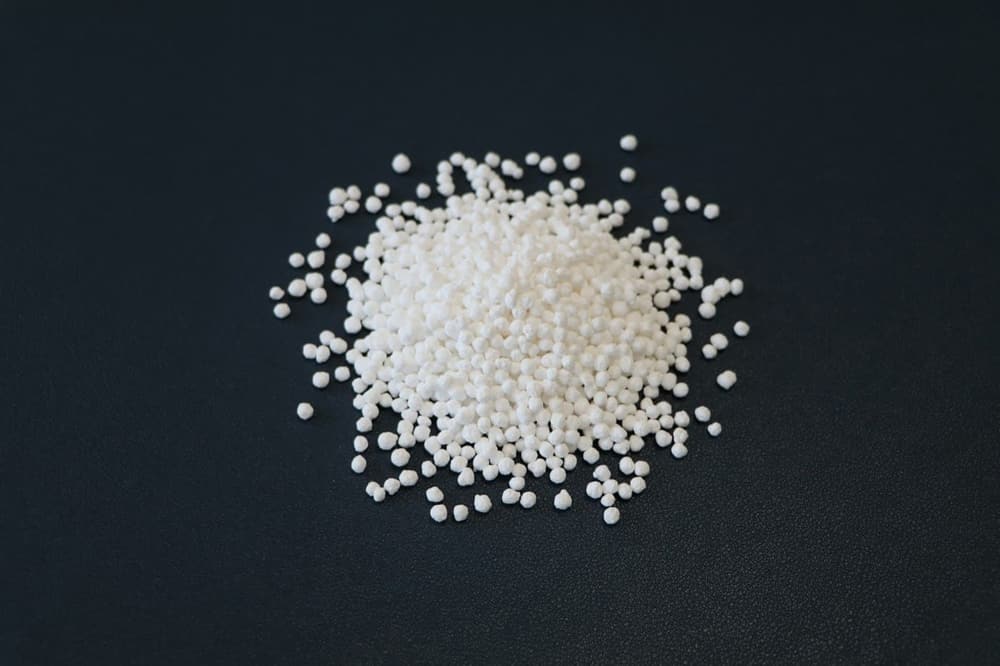
The book covers the mainstream mineral grades: granular and prilled urea, DAP, MAP, TSP, MOP and SOP, ammonium sulphate, calcium ammonium nitrate, granulated and blended NPKs, and the fully soluble grades used for fertigation. Every offer rests on a written specification — guaranteed nutrient minimums, moisture and granulation — and on a named production origin. Where the destination runs a fertilizer registration system, the grade is checked against it before a contract is drawn up; in Indonesia that means Ministry of Agriculture registration and, for grades covered by a mandatory standard, SNI conformity.
Tonnage comes from producers and established distributors, and each parcel is tied to a production lot with its own certificate of analysis. On request, an independent surveyor (SGS, Bureau Veritas, Intertek or the buyer's nominee) samples at the load port and reports nutrient analysis, granulometry, moisture and draft-survey weight. The contract states plainly whether those load-port findings are final for payment.
Depending on how the discharge port handles cargo, product ships as bulk vessel parcels, as lined bulk-in-container or bagged on pallets. Urea, ammonium sulphate and potash draw moisture from the air, so for tropical ports — or wherever stock will sit through a season — they go in lined or laminated bags. Products based on ammonium nitrate are offered only where the classification, permit and storage rules of every transit and destination country can be met, and the paperwork is built around those rules.
Where it is used
- Nitrogen top-dressing on rice, maize and sugarcane
- Basal phosphate at planting for rice, maize, legumes and oilseeds
- Potash for oil palm and other chloride-tolerant crops (MOP), and SOP for chloride-sensitive crops such as tobacco, potato and fruit
- Fertigation and drip feeding in greenhouse and open-field horticulture
- Bulk blending to a nutrient recommendation drawn from soil and leaf analysis
- Technical uses — ISO 22241 urea for diesel exhaust fluid and industrial ammonium sulphate, priced apart from fertilizer grades
Markets we ship to
- Indonesia — plantation, food-crop and blending markets
- Malaysia
- Thailand, Vietnam and the Philippines
- South Asia — India, Bangladesh, Sri Lanka and Pakistan
- Australia and New Zealand
- Papua New Guinea and the Pacific islands
Product lines
Grades, typical analyses and pack formats
Typical figures, published so a buyer can check the fit before getting in touch. The binding values and tolerances are the ones written into our offer.
01
Urea 46% N — Granular
Granular urea for direct broadcasting and bulk blending. The nitrogen figure is fixed by chemistry, so the grade is really decided by crushing strength and a low biuret content.
Packaging
- 50 kg PP woven bags, 20 t or 25 t per container
- 1,000 kg jumbo bags (FIBC)
- Bulk vessel parcels and bulk-in-container with liner
| Nitrogen | 46% min, dry basis |
|---|---|
| Biuret | 1.0% max |
| Moisture | 0.5% max |
| Granulation | 2–4 mm, 90% min; crushing strength 2.5–3.5 kgf |
| Conditioning | Anti-caking treated; formaldehyde-conditioned grades available |
| HS Code | 3102.10 |
02
Urea 46% N — Prilled
Prilled urea for field application, dissolving and industrial use. It goes into solution faster than granular, which makes it the usual choice where urea is applied as a liquid.
Packaging
- 50 kg PP woven bags
- 1,000 kg jumbo bags (FIBC)
- Bulk
| Nitrogen | 46% min, dry basis |
|---|---|
| Biuret | 1.0% max; 0.9% max on request |
| Moisture | 0.5% max |
| Particle size | 1–2.4 mm, 90% min |
| Technical grade | Urea to ISO 22241-1 for diesel exhaust fluid is a separate specification and is quoted separately |
| HS Code | 3102.10 |
03
DAP 18-46-0
Granular diammonium phosphate for basal phosphate, specified on both total and water-soluble P₂O₅ instead of total phosphate alone.
Packaging
- 50 kg PP woven bags
- 1,000 kg jumbo bags (FIBC)
- Bulk
| Nutrients | N 18% min; total P₂O₅ 46% min |
|---|---|
| Water-soluble P₂O₅ | 41% min |
| Moisture | 2.0% max |
| Granulation | 2–4 mm, 90% min |
| Cadmium | Limit set by destination; Regulation (EU) 2019/1009 caps phosphate fertilisers at 60 mg Cd/kg P₂O₅ |
| HS Code | 3105.30 |
04
MAP 11-52-0 and TSP 46% P₂O₅
Granular monoammonium phosphate and triple superphosphate for basal application, alongside water-soluble MAP 12-61-0 for fertigation systems.
Packaging
- 50 kg PP woven bags
- 25 kg bags for water-soluble MAP
- 1,000 kg jumbo bags (FIBC)
- Bulk
| MAP | N 11% min; P₂O₅ 52% min; water-soluble P₂O₅ 48% min |
|---|---|
| TSP | P₂O₅ 46% min; water-soluble P₂O₅ 40% min |
| Moisture | MAP 1.5% max; TSP 4.0% max |
| Granulation | 2–4 mm, 90% min |
| Water-soluble grade | MAP 12-61-0, solubility 99% min, low pH, for injection and drip systems |
| HS Code | 3105.40 (MAP); 3103.11 (TSP) |
05
MOP 60% K₂O and SOP 50% K₂O
Muriate of potash in standard, granular and compacted forms, and sulphate of potash for crops that will not tolerate chloride. Pink or white colour reflects the source, not the quality.
Packaging
- 50 kg PP woven bags with PE liner
- 1,000 kg jumbo bags (FIBC)
- Bulk; 20 ft containers normally used for dense potash
| MOP | K₂O 60% min (KCl 95% min); moisture 0.5% max |
|---|---|
| SOP | K₂O 50% min; S 17–18%; Cl 1.5% max |
| Granulation | Standard 0.3–1 mm; granular and compacted 2–4 mm |
| Sodium chloride | Varies by source in MOP; stated per lot on the certificate of analysis |
| HS Code | 3104.20 (MOP); 3104.30 (SOP) |
06
Ammonium Sulphate 21-0-0 and CAN 27% N
Ammonium sulphate, supplying nitrogen and sulphur in one product, and calcium ammonium nitrate where both nitrate nitrogen and calcium are needed.
Packaging
- 50 kg PP woven bags with PE liner
- 1,000 kg jumbo bags (FIBC)
- Bulk for ammonium sulphate, subject to destination rules for CAN
| Ammonium sulphate | N 21% min; S 24% min; free acid 0.2% max; caprolactam, steel and granular grades |
|---|---|
| Ammonium sulphate size | Crystal 0.5–2 mm; compacted or granular 2–4 mm |
| CAN | N 27% (13.5% nitrate, 13.5% ammoniacal); CaO 8% min |
| Regulatory status | Ammonium nitrate based fertilisers may fall under UN 2067, Class 5.1 depending on composition; classification rests on the trough test in the UN Manual of Tests and Criteria, and import, transit and storage permits are destination-specific |
| HS Code | 3102.21 (ammonium sulphate); 3102.60 (calcium ammonium nitrate) |
07
NPK Compounds, Blends and Water-Soluble Grades
Chemically granulated compounds, bulk blends mixed to the buyer's own formula, and fully soluble grades for injection and drip lines.
Packaging
- 25 kg bags for water-soluble grades
- 50 kg PP woven bags for compounds and blends
- 1,000 kg jumbo bags (FIBC)
- Bulk for blending plants
| Compound grades | 15-15-15, 16-16-16, 20-10-10, 12-12-17+2MgO and other granulated grades |
|---|---|
| Blends | Blended to buyer formula from urea, DAP or MAP, MOP or SOP and micronutrient carriers |
| Water-soluble grades | 19-19-19, 20-20-20, MKP 0-52-34, potassium nitrate 13-0-46, calcium nitrate 15.5% N with 26% CaO, urea phosphate 17-44-0 |
| Solubility | 99% min for water-soluble grades, with EC and pH in solution stated per grade |
| Micronutrients | Zn, B, Fe, Mn and Cu as sulphates or as EDTA and DTPA chelates |
| HS Code | 3105.20 (NPK); 3105.60 (MKP); 3102.60 (calcium nitrate); 2834.21 or 3105.90 for potassium nitrate depending on presentation |
Shipping & paperwork
How the cargo is packed, priced and documented
Packaging & stowage
- Export bagging is normally 50 kg PP woven bags, 20 t or 25 t to a container; FIBCs are used where the receiver has forklifts and hoppers.
- Urea, ammonium sulphate and MOP pick up moisture, so PE-lined or BOPP-laminated bags are specified for humid ports and for stock held across a season.
- Bags show the grade and nutrient declaration, net weight, lot, production date, producer, origin and any statutory wording the destination requires. Subsidy-programme marking is applied only from authorised artwork provided by the buyer.
- Bulk-in-container uses a liner and bulkhead. Payload is the constraint, so dense potash and phosphate normally go in 20 ft units.
- Bulk vessel parcels need hold cleanliness confirmed and, for hygroscopic cargo, ventilation and weather-working clauses in the charter — clauses that matter most when loading in the wet season.
Incoterms we use
- FOB — bulk parcels and containers loaded at the named port onto the vessel or booking the buyer nominates.
- CFR — the standard basis for bagged and bulk parcels into Indonesian, ASEAN and South Asian ports.
- CIF — CFR with marine cover at the Incoterms 2020 minimum of Institute Cargo Clauses (C); ICC (A) on request.
- FAS — bulk parcels taken from alongside at the load port by the buyer's vessel or barge, a common arrangement for onward inter-island movement.
- DAP — delivery to a named inland warehouse or blending plant, with import clearance and duties for the buyer.
- FCA — export-cleared handover at a named terminal for buyers running their own freight.
Documents supplied
- Commercial invoice and packing list with grade, nutrient declaration, net and gross weight and HS code
- Bill of lading, or charter party bill of lading with the charter for vessel parcels
- Certificate of origin, including ATIGA Form D for ASEAN-origin cargo, legalised where required
- Certificate of analysis for each production lot, naming the method used for every declared nutrient
- Independent certificate of quality, sampling and weight at load port, with a draft survey report for bulk
- GHS-format safety data sheet
- Fertilizer registration or import approval reference where the destination requires one
- Heavy-metal or radioactivity certificate where the destination asks for it
For producers
Supplying this division
Producers and distributors with export allocation — in the Gulf, East and Southeast Asia or elsewhere — are welcome to send specification, monthly availability, load port and bagging capability. We assess offers on documented analysis, lot traceability and access for a load-port surveyor.
Start an enquiry
Give us the grade and the port. We will return origins, terms and a firm price.
Quantity, destination, delivery window and the specification you buy against are enough to begin. Where a product falls outside our book, we tell you plainly instead of offering a substitute.
Answered within one business day · Denpasar, Bali